Art is either plagiarism or revolution.
Paul Gauguin
Artists constantly debate what art is. Among, as well as within, themselves. Often the conflict, or at least the point of contention is whether art is or has to be an original creation.
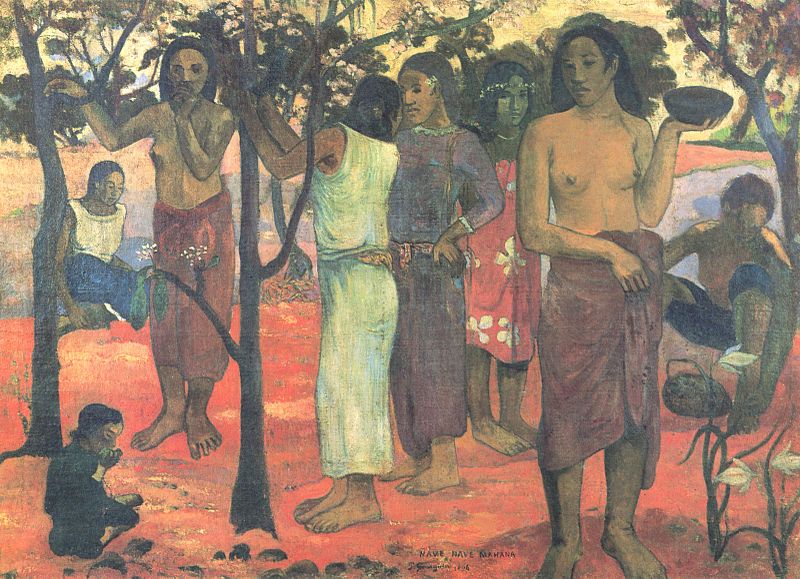
But what qualifies as original anyway? More likely than not, our ideas or at least the germ of each one of them—whether we’re artists or not—have already been someone else’s. Many someones, in fact. Even so, I believe French impressionist Paul Gauguin, best known for paintings of lusty, luscious Polynesian women, exaggerates when he says art is plagiarism.
Often, an artist does put her own spin on her artworks to make it her own. Exaggeration, for instance, has been a technique in art for quite a while—for example, expressionism’s bold lines and intense atypical colors. And in writing, artists have used hyperbole.
The practice of copying didn’t faze monastic artists of the 9th century when they created the Utrecht Psalter, now considered a masterpiece among illuminated manuscripts—that medieval incarnation of picture books. Sometimes called manuscript illuminations, they sought to teach a kingdom’s subjects—people who ordinarily could not read—about faith and religion.
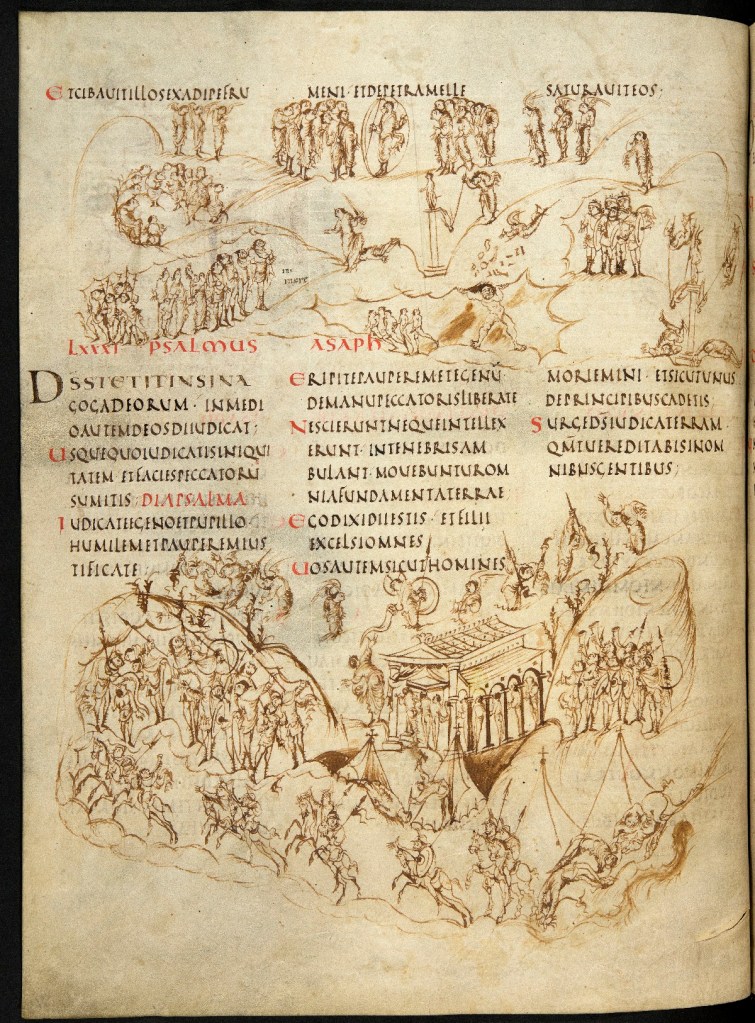
These artists, instead of creating original pictures, copied drawings from extant picture cycles. Later, other monastic artists borrowed from the Utrecht Psalter, producing at least one other known religious book that unabashedly copied its illustrations. That manuscript, the Harley Gospel, is now in the British Library.
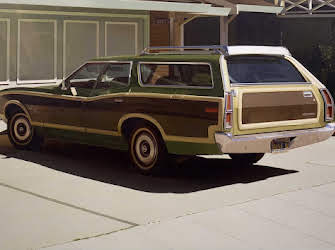
A more modern version of copying could be argued for the practice of photorealism—when artists “copy” nature, events, and people to produce paintings that could be mistaken for photographs.
In the rare instances that an idea is original, it usually foments a revolution. One such instance occurred in the mid-19th century when Edouard Manet defied the classicist rules of the French Academie des Beaux Arts, employing freer brushstrokes and techniques of perspective, depth, form etc.; and instead of mythological, religious, or historical scenes, painting life as he saw it being lived in his day.
He attracted and inspired young artists who transformed painting into points , dashes, or splashes of light that the eyes see as a whole, also depicting scenes from everyday life. One journalist/critic pounced on those points and dashes, mocking the style and calling it impressionism,
Ironically, one of the biggest revolutions in modern art sprang from French artist Marcel Duchamp’s attempt to test the limits of an art exhibition that advertised itself as all-inclusive. He submitted a urinal he turned upside down, labeled it “Fountain” and signed it R.Mutt. No one will dispute that Fountain is not Duchamp’s original creation, raising questions about what art is. The artworld now labels an object like this as a ready-made—one that most people are familiar with.
Though the first “Fountain” didn’t make it to the exhibition because it disappeared mysteriously before the salon’s opening, copies of it have been displayed in museums. Duchamp’s provocative move has resulted in the Dada movement in particular (see this for a neo-Dada example), and avant garde art in general.
 artsy rambler