I didn’t notice them right away because they were up high, near the top of the church. Besides I was predisposed to heed the saintly figures lined up side by side along the façade of the Notre Dame cathedral in Paris and on the religious scenes and figures adorning its entrances.
It wasn’t until later—after going through the church and before finding a bench to rest on for a few minutes, under the trees behind the cathedral—that I saw them. I looked up towards the cathedral spire, my gaze alighting on grotesque-looking creatures protruding out of the edges of a lower roof, their mouths open as if they were ready to vomit or spew fire out of their bodies.
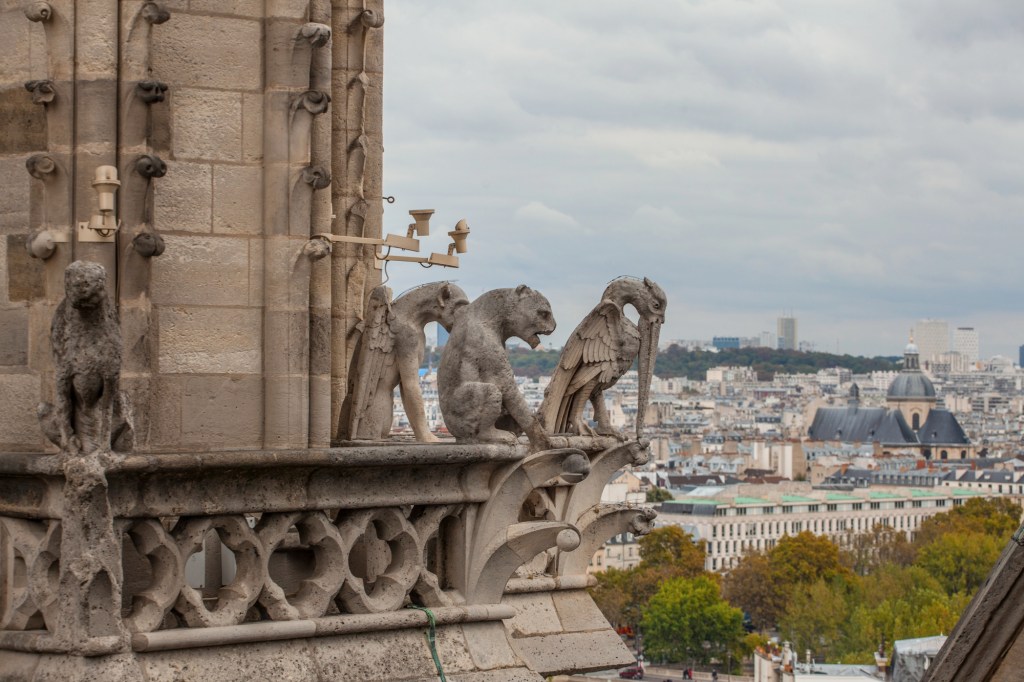
I shuddered a little, uncontrollably. For some reason, those grotesque figures made me think of Alexandre Dumas’ novel Hunchback of Notre Dame. It wasn’t because Quasimodo had any physical resemblance to those creatures. It was more the feeling of dread that united these figures in my mind—the imagined dark psychological mysteries behind their peculiarities.
It took me some time to find out what those creatures were—that trip occurred before the internet and researching anything entailed trudging to a library and pulling books out of shelves.
It turns out those grotesque creatures—gargoyles, I learned—were harmless and, in fact, useful. They were created for a very practical purpose—to drain water from the gutters on the roof of the cathedral, their open mouths serving as spouts. In fact, the word “gargoyle” originated from the Old French word for throat: gargouille.
But why construct these spouts using monstrous forms?
There were actually other grotesques on the church’s roof with their mouths closed.. These “creatures” (known as chimeras) were mostly ornamental and could not be used for drainage.
Much later, I thought of gargoyles again while doing research for The Golden Manuscripts, the last book in my fiction series, Between Two Worlds. Many medieval manuscripts of the Gothic period—the majority of which were religious—had images on the edges of books (like the one below) depicting figures/creatures that were also grotesque.
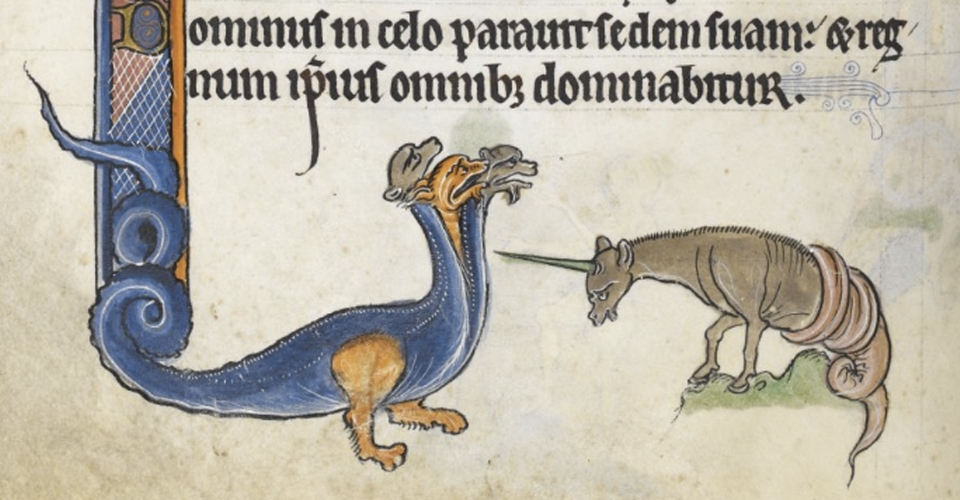
No present-day scholar can tell you precisely why those grotesque figures fascinated the medieval man, enough to make them a part of the church’s drainage system or as decorations on the margins of religious books.
 artsy rambler